

Restorative dentistry in Guelph
Tooth erosion treatment that rebuilds what acid has worn away.
When erosion has already removed enough enamel to cause sensitivity, thin edges, or a change in how your teeth look, restoring the surfaces can help. Treatment ranges from sealing exposed areas with bonding to covering teeth with onlays or crowns, and it works best once the source of acid is under control.
Why it matters
Restoring eroded teeth can bring back comfort and strength.
Once dentin is exposed, teeth tend to wear faster and feel more sensitive. Covering those areas protects them and can improve appearance.
Ease sensitivity
Covering exposed dentin with a bonded restoration often reduces sensitivity to cold, sweets, and brushing.
Rebuild thin edges
Front teeth that have become thin or see-through at the edges can be rebuilt to restore length and strength.
Fill cupped areas
Erosion can leave small craters on the chewing surfaces of back teeth. Filling them helps prevent faster wear.
Improve colour and shape
As enamel thins, teeth can look yellow or uneven. Restorations can restore a more natural appearance.
Start conservatively
Bonding is often the first option because it adds material without removing much tooth structure.
Plan for the long term
When erosion is severe, onlays or crowns may be recommended to protect teeth more fully.
What to expect
A staged plan that protects first and restores where needed.
Erosion treatment is planned carefully. We often start with the most sensitive or most worn teeth and build from there.
Confirm the cause is addressed
We check that the acid source has been identified and reduced. Restorations last longer when erosion is no longer active.
Map the affected teeth
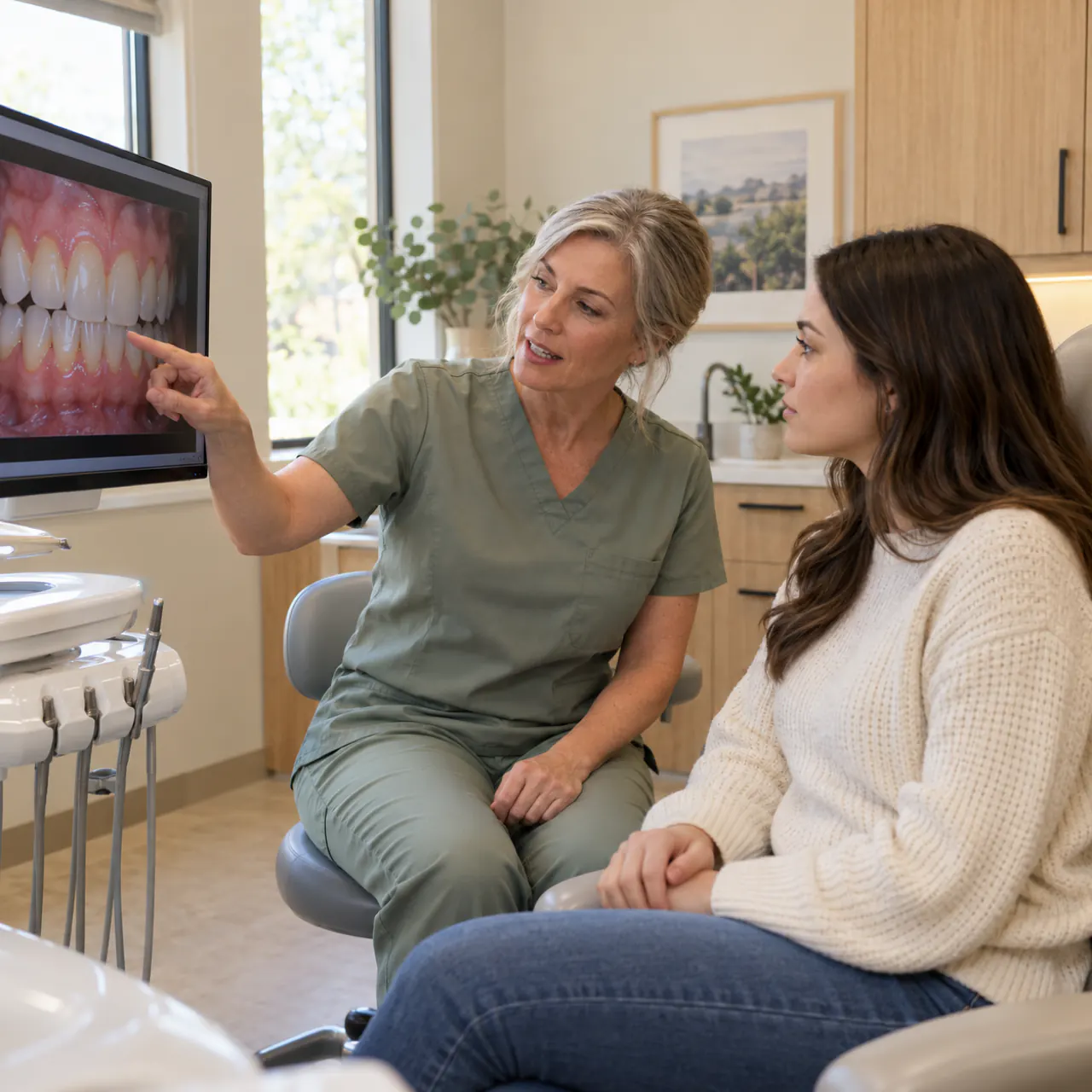
Photos, models, or scans record which surfaces are worn and by how much. This helps us plan which teeth to treat first.
Discuss restoration options
Your dentist explains bonding, onlays, veneers, or crowns and how each fits your teeth. We also discuss timing and staging.
Treat sensitive areas first
The most sensitive or vulnerable teeth are often treated first. Bonding can usually be placed in a single visit.
Rebuild remaining surfaces
Further teeth are restored in planned stages. If the bite has changed, we may plan the restorations together to keep it balanced.
Protect and monitor
We recommend fluoride and home care to protect the restorations and remaining enamel. Regular checks help catch any new erosion.
Erosion repair details
How erosion affects teeth and the restoration options available.
The right repair depends on how much enamel is gone and which surfaces of the teeth are affected.
How erosion can affect teeth
- Smooth, glassy surfaces on the cheek side of teeth
- Thin or translucent edges on front teeth
- Yellowing as dentin shows through
- Small cups or dips on molar chewing surfaces
- Fillings that appear to sit higher than the tooth
- Sensitivity to cold, sweet, or acidic foods
- Wear on the inner surfaces of upper front teeth
- Teeth that look shorter than they used to
Restoration options we may discuss
- Desensitizing treatment for mildly exposed areas
- Composite bonding to cover worn surfaces
- Bonded fillings for cupped areas on back teeth
- Onlays for back teeth with significant wear
- Veneers for front teeth when appropriate
- Crowns for teeth with extensive erosion
- Staged treatment to manage several teeth
- Prescription fluoride to protect remaining enamel
Visit us in Guelph
Erosion repair with time to explain every option.
Erosion often affects several teeth, so planning matters. At Ironwood Dental on Kortright Road West, we take time to show you photos of your teeth, explain the choices, and plan treatment in steps that work for your schedule and comfort.
Related services
Related care for worn and sensitive teeth
Questions patients ask
Tooth erosion treatment FAQs
Questions patients ask when eroded teeth need to be restored.
Can eroded teeth be repaired?
Yes. Lost tooth structure can be restored with bonding, onlays, veneers, or crowns, depending on how much enamel is gone. The enamel itself cannot grow back, so repair uses dental materials.
Do I need to stop the erosion before treatment?
It helps a great deal. Restorations last longer when the acid source has been reduced. We often work on prevention first, or at the same time as early repairs.
Is bonding enough for eroded teeth?
Bonding works well for many patients with mild to moderate erosion. If erosion is severe or the bite has changed, onlays or crowns may provide better long-term protection.
Will treatment stop my teeth from being sensitive?
Covering exposed dentin often reduces sensitivity significantly. Some patients still notice mild sensitivity, which can usually be managed with toothpaste for sensitive teeth or fluoride.
How many teeth will need treatment?
It depends on how widespread the erosion is. Some patients need only a few teeth treated, while others benefit from a planned approach to several teeth. We map this out with you at the planning stage.
How is tooth erosion treatment different from acid-wear treatment?
On our site, acid-wear treatment focuses on finding and controlling the cause of erosion. Tooth erosion treatment focuses on repairing the damage that has already happened. Most patients benefit from both.
Can erosion return after my teeth are restored?
The restored surfaces resist acid better than exposed dentin, but untreated teeth and the edges of restorations can still be affected. Keeping the acid source under control helps protect your results.
Are there medical causes of tooth erosion?
Yes. Acid reflux, frequent vomiting, eating disorders, and dry mouth from medications can all play a role. If we suspect a medical cause, we encourage you to speak with your physician, and you should not stop any medication without medical advice.