

Bite correction in Guelph
A crossbite is about how your teeth meet, and correcting it can protect teeth, gums, and jaw comfort.
In a crossbite, some upper teeth sit inside the lower teeth when you bite down, instead of slightly outside them. It can affect one tooth or a whole side, at the front or the back. Crossbites are often more about function than appearance, and timing matters, especially in growing children.
Why crossbites matter
Correcting how teeth meet can prevent problems down the road.
Crossbites can lead to uneven wear, gum stress, and jaw shifting. Addressing them at the right time may make treatment simpler.
More balanced jaw movement
Some crossbites cause the lower jaw to shift sideways to close. Correcting the bite may help the jaw close more naturally.
Less uneven tooth wear
Teeth caught in a crossbite can rub or chip against each other. Better alignment may reduce that wear.
Less stress on gums
A front tooth in crossbite may be pushed forward by the bite, which can contribute to gum recession over time.
Guides growth in children
In growing children, early treatment of certain crossbites may help guide jaw development, depending on the case.
Options for adults too
Many tooth-related crossbites in adults can be addressed with clear aligners or other orthodontic care.
A more even smile
Correcting a crossbite can also improve how the smile looks from the front, especially when the midline is off.
Crossbite assessment
How we evaluate a crossbite and choose the next step.
The type of crossbite and whether it comes from the teeth or the jaws shapes everything that follows.
Observe how teeth meet
We watch you bite together and move your jaw, noting which teeth sit inside or outside where they should. We also check whether the jaw shifts as it closes.
Determine front or back
An anterior crossbite involves front teeth, while a posterior crossbite involves back teeth on one or both sides. Each has different implications.
Decide if it is dental or skeletal
Some crossbites come from tipped teeth, while others come from a difference in jaw width or position. X-rays and records help us tell the difference.
Check wear, gums, and jaw comfort
We look for chipping, worn edges, gum recession, and any jaw discomfort. These findings help gauge urgency.
Discuss timing and options
For children, we explain whether early treatment or monitoring is recommended. For adults, we discuss aligners, other orthodontic care, or referral when needed.
Treat, refer, or monitor
Depending on the case, we may begin treatment, coordinate with an orthodontist for expansion or complex care, or plan regular checks. Retention follows any correction.
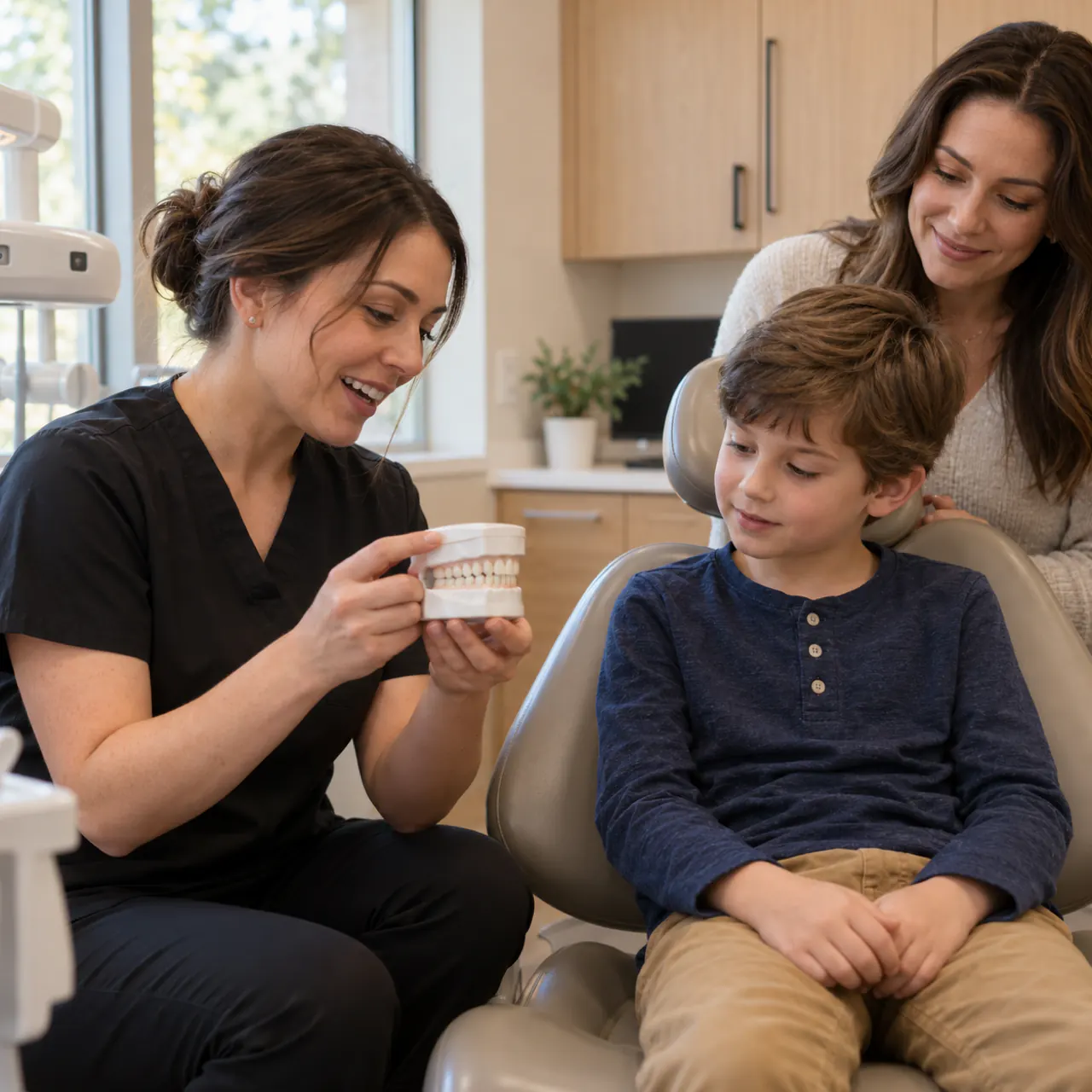
Types and options
Front and back crossbites, and how they may be treated.
Crossbites are not all the same. Knowing which kind you or your child has helps explain the treatment options.
Types of crossbite
- Single front tooth sitting behind the lower teeth
- Several front teeth in crossbite
- Back teeth on one side sitting inside the lower teeth
- Back teeth on both sides in crossbite
- Crossbite with a sideways shift of the lower jaw
- Crossbite caused by tipped teeth
- Crossbite caused by a narrow upper jaw
- Crossbite combined with crowding or an underbite
Possible approaches
- Monitoring in young children when appropriate
- Early orthodontic assessment during growth
- Upper jaw expansion in growing children, often with an orthodontist
- Clear aligners for tooth-related crossbites
- Limited movement of a single front tooth
- Comprehensive orthodontic treatment
- Coordination with a specialist for skeletal cases
- Bonding or restorations to repair wear once corrected
Bite care in Guelph
Watching bites grow and change, from childhood to adulthood.
Many crossbites are first noticed during a child's routine checkup at our Kortright Road West office. Because we see families over many years, we can monitor a developing bite and recommend early assessment at the right time. When jaw growth or complex correction is involved, we coordinate with a trusted orthodontist in the area.
Related services
Related pages for bite and alignment concerns.
Questions patients ask
Crossbite FAQs
Parents and adult patients often have different questions about crossbites. Here are answers to both.
What is a crossbite?
A crossbite is when one or more upper teeth sit inside the lower teeth when you bite together, instead of slightly outside them. It can involve front teeth, back teeth, or both.
Does a crossbite need to be treated?
Many crossbites benefit from treatment because they can cause uneven wear, gum stress, or jaw shifting. Whether and when to treat depends on the type, its cause, and the patient's age.
At what age should a child's crossbite be checked?
Crossbites are often noticed during routine childhood checkups. An early orthodontic assessment may be recommended in the early school years, since some crossbites are easier to address while the jaws are still growing.
Can Invisalign fix a crossbite?
Clear aligners may correct crossbites caused by tipped teeth, particularly in adults and teens. Crossbites caused by a narrow jaw may need expansion or other orthodontic care, which may be coordinated with an orthodontist.
Can a crossbite cause jaw pain?
Some people with crossbites notice jaw tension, especially if the jaw shifts to one side to close. Not everyone has symptoms. If you have jaw discomfort, we can assess both your bite and your jaw joints.
Will a crossbite correct itself as my child grows?
Some minor crossbites in baby teeth may change as permanent teeth come in, but others can persist or affect growth. That is why monitoring and timely assessment are important.
What is the difference between a crossbite and an underbite?
An underbite usually describes the lower front teeth sitting ahead of all the upper front teeth. A crossbite can involve just a few teeth, at the front or the back. The two can occur together.
Can adults still correct a crossbite?
Yes, especially when the crossbite is caused by the position of the teeth. Skeletal crossbites in adults can be more complex and may involve specialist care, which we can help coordinate.