

Crowding care in Guelph
Crowded teeth are a space problem, and solving it starts with finding room.
Teeth become crowded when there is not enough room in the jaw for them to line up side by side. They overlap, twist, or push forward or back. Beyond appearance, crowding can make teeth harder to clean. Treatment focuses on how to create or manage space so teeth can sit in a healthier line.
Why treat crowding
More room for teeth can mean easier cleaning and a calmer smile.
Mild crowding may be cosmetic only, but moderate crowding can trap plaque and affect gum health. Treatment goals vary from person to person.
Easier brushing and flossing
When teeth no longer overlap, toothbrush bristles and floss can reach surfaces that were hidden before.
Supports healthier gums
Less trapped plaque around crowded areas may help reduce gum inflammation and tartar buildup.
Reduces uneven wear
Teeth that are pushed out of line can wear unevenly. Better alignment may help spread contact more evenly.
A more even smile line
Many people simply want their front teeth to look more orderly when they smile or speak.
Prevents crowding from worsening
Crowding, especially in the lower front teeth, can increase over time. Treating it may stop that progression when combined with retention.
Prepares for future dental work
Aligned teeth can be easier to restore with fillings, crowns, or veneers later on.
Assessing crowding
How we measure crowding and plan for space.
The amount of crowding helps decide the approach. We look at how much space is missing and where it could reasonably come from.
Look at where crowding occurs
We note which teeth overlap or twist and whether the crowding is in the upper, lower, or both arches. Lower front crowding is especially common.
Estimate how much space is missing
A scan or models help us measure how much room teeth need. This is often described as mild, moderate, or severe crowding.
Check gums and cleaning access
Your hygienist looks for plaque, tartar, and gum inflammation around crowded areas. This tells us how crowding is affecting your oral health.
Explain the space options
We discuss how space could be made, such as gentle arch shaping, polishing small amounts of enamel between teeth, or in some cases removing a tooth. Each has trade-offs.
Choose a treatment approach
Mild to moderate crowding is often treatable with clear aligners. Severe crowding or cases needing extractions may be better managed with an orthodontist.
Plan retention from the start
Crowding tends to return without retention, so we talk about retainers before treatment begins. A bonded lower retainer is often considered.
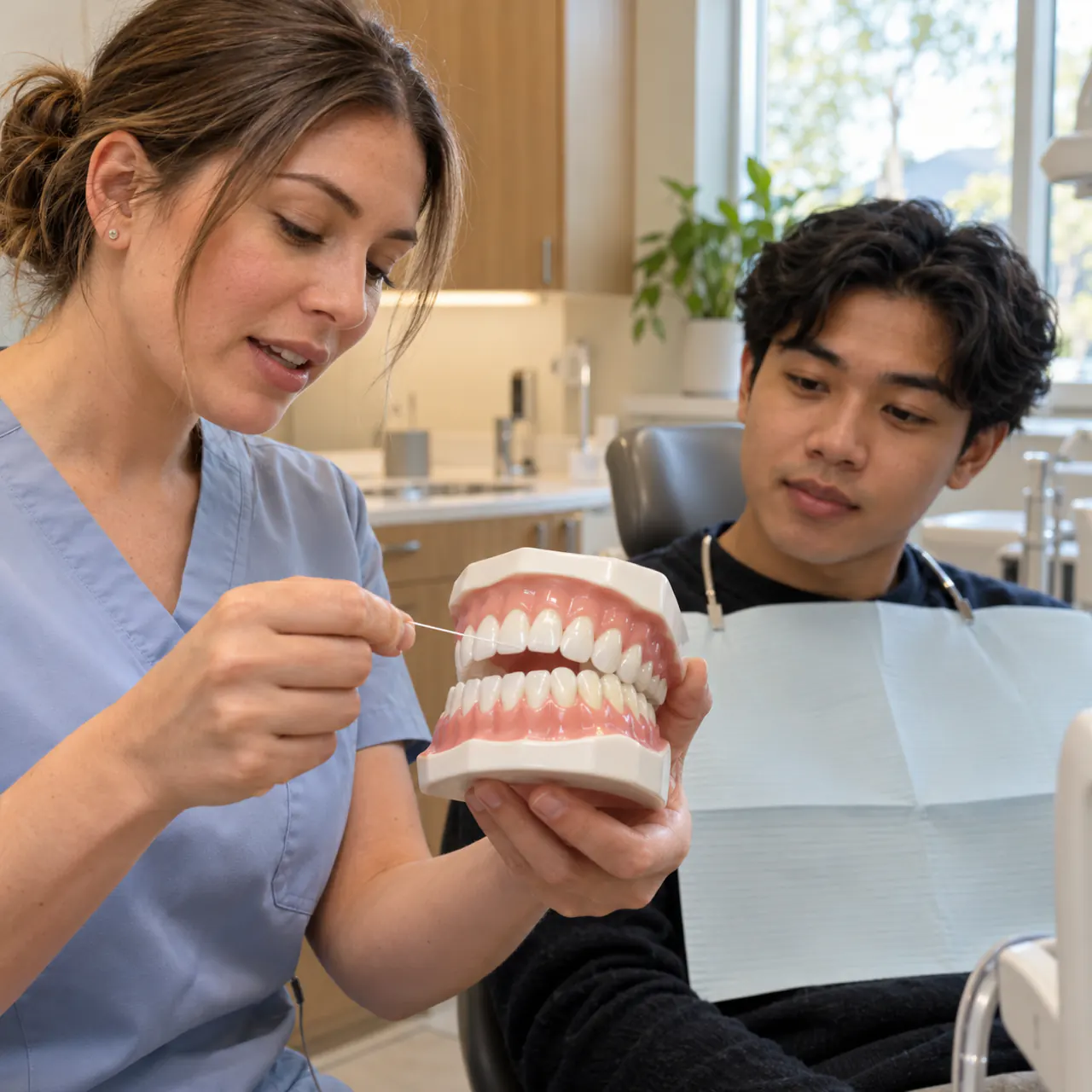
Understanding crowding
What causes crowding, and the ways space can be made.
Crowding has several possible causes, and there is more than one way to create the room teeth need.
Common causes of crowding
- Teeth that are large relative to jaw size
- A narrow upper or lower arch
- Baby teeth lost too early or too late
- Inherited jaw and tooth size patterns
- Natural forward drift of teeth with age
- Relapse after past orthodontic treatment
- Extra teeth or teeth that came in out of position
- Pressure from habits such as tongue thrust
Ways space can be created
- Gently widening or reshaping the arch with aligners
- Polishing tiny amounts of enamel between teeth
- Tipping front teeth slightly forward when appropriate
- Moving back teeth to free up room, depending on the case
- Removing a tooth in some severe cases
- Replacing oversized old restorations with better-shaped ones
- Combining alignment with bonding to balance tooth sizes
- Referral for orthodontic treatment when skeletal factors are involved
Crowding care in Guelph
Watching crowding over time at your regular visits.
Crowding often develops slowly, especially in the lower front teeth. Because many patients see us for regular cleanings at our Kortright Road West office, we can track changes over the years and talk about treatment when it would help. If crowding is complex, we can coordinate with an orthodontist in the Guelph area.
Related services
Related pages for crowding and alignment.
Questions patients ask
Crowded teeth FAQs
Crowding is one of the most common reasons people ask about straightening their teeth. Here are answers to the questions we hear most.
Do crowded teeth need to be treated?
Not always. Mild crowding that you can clean well may be monitored. Treatment is worth discussing if crowding is making cleaning difficult, affecting your gums or bite, getting worse, or bothering you cosmetically.
Can Invisalign fix crowded teeth?
Clear aligners can often treat mild to moderate crowding. More severe crowding, or cases where teeth may need to be removed, may be better suited to braces or orthodontist care. An exam helps determine which applies to you.
Why are my lower front teeth getting more crowded with age?
Teeth naturally tend to drift forward and inward over a lifetime, and the lower front teeth are especially affected. This can happen whether or not you had braces before.
Will I need teeth pulled to fix crowding?
Many crowding cases can be treated without extractions by creating space in other ways. In some severe cases, removing a tooth may be recommended, and we would explain why before any decision is made.
What is enamel polishing between teeth?
Sometimes called interproximal reduction, it involves removing a very small amount of enamel from between certain teeth to create room. It is done carefully and only where enamel thickness allows.
Do crowded teeth cause cavities?
Crowding itself does not cause cavities, but overlapping teeth can trap plaque and food in places that are hard to clean. That can increase the risk of decay and gum inflammation.
Do wisdom teeth cause crowding?
This is a common belief, but crowding usually has several causes, and wisdom teeth are not always responsible. If you are concerned, we can assess your wisdom teeth as part of your exam.
How do I clean crowded teeth until they are treated?
Floss picks, interdental brushes, and a soft brush angled into overlapping areas can help. Your hygienist can recommend tools that fit the spaces in your mouth.